How a Capsule Comes Together
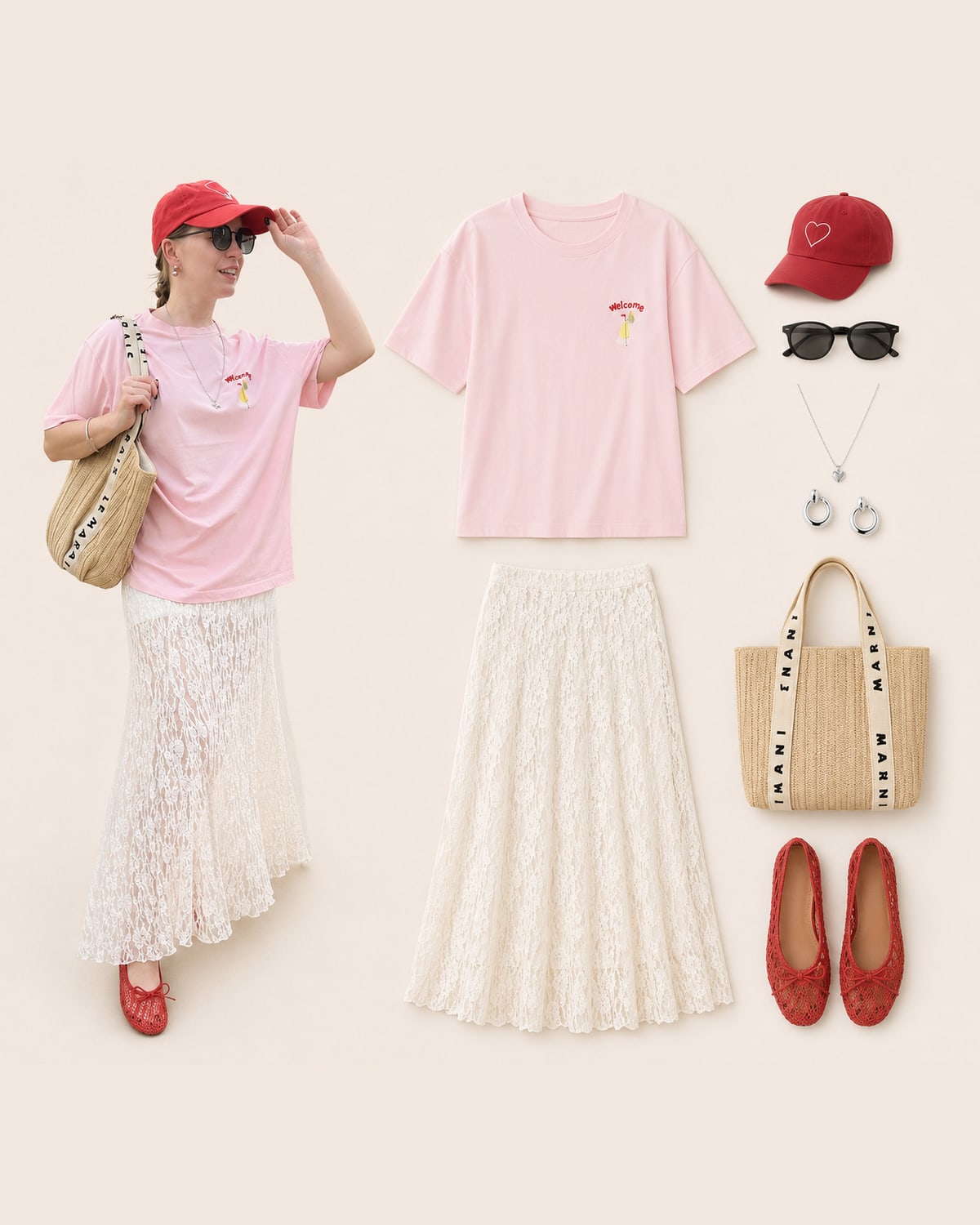
The foundation is ready: you know what a base is, what your body type is, and which colors work near your face. Now — the system it was all for. The capsule.
Everyone has heard the word, and for many it's scary. It seems a capsule is a strict list: exactly so many items, everything neutral, one step aside and it's no longer a capsule. Like the "base list" from the internet, only stricter.
In reality a capsule is just a small group of items that all go together and cover one area of your life. Not the whole wardrobe. A working block inside it.
The capsule has a lovely history, by the way. The term was coined in the seventies by Susie Faux — owner of the London boutique Wardrobe: she offered clients a small set of quality pieces that all work with each other. And in 1985 the designer Donna Karan made the idea famous: her "Seven Easy Pieces" collection — seven items from which a businesswoman's wardrobe is built — turned the industry upside down. The idea is half a century old and hasn't aged, because it solves an eternal task: to look put-together without spending your morning or your money.
The easiest way to feel a capsule is through a suitcase. Pack a single carry-on for a long trip — and you get a capsule: a few items that go together and suit life on the road.
A suitcase teaches the "one in, one out" rule right away: there's no room, so if you buy something new, remove something old. And it teaches you to choose for the system: every new item has to fit with the rest, or there's simply no place for it.
A capsule isn't built from an internet list. Before we build it, I do a questionnaire with the client — there are more questions, but three are the main ones.
First: where will I wear this? Office, working from home, walks with the kids, trips — every life has its own answer.
Second: how do I want to feel in it? Put-together, relaxed, noticeable, calm.
Third: what matters more — comfort or beauty? An honest answer, without "both": in different areas of life it's different.
From the answers a precise picture of the future capsule takes shape. Then the base goes into it — pieces of calm cut in your colors, chosen for your figure — plus a couple of accents that make the looks yours.
And here's where the whole point happens. Outfits start assembling themselves. When every item goes with every other, you don't have to think in the morning — any combination works. When the base is built, imagination switches on by itself: outfits get invented from what you already have — and it's genuinely fun. It's not about special talent. It's the math of the capsule: the items are chosen for each other, so the combinations come together on their own.
There can be several capsules — for different areas of life. Work. Home. Going out. Travel. A mom on maternity leave and a company director will have different capsules — not because someone has better taste, but because life is different. That's why someone else's ready-made capsule from the internet won't fit: it was built for someone else's life.
There's modern confirmation too. American Courtney Carver launched the Project 333 experiment: for three months wear only thirty-three items, including shoes and accessories. The experiment went global — tens of thousands of people did it, and most admitted: those around them didn't even notice the wardrobe had shrunk. What I like about this experiment is the conclusion, not the number: I don't think a capsule is about a strict count. It's about combinability. How many items you need is decided by your life, not by someone's list.
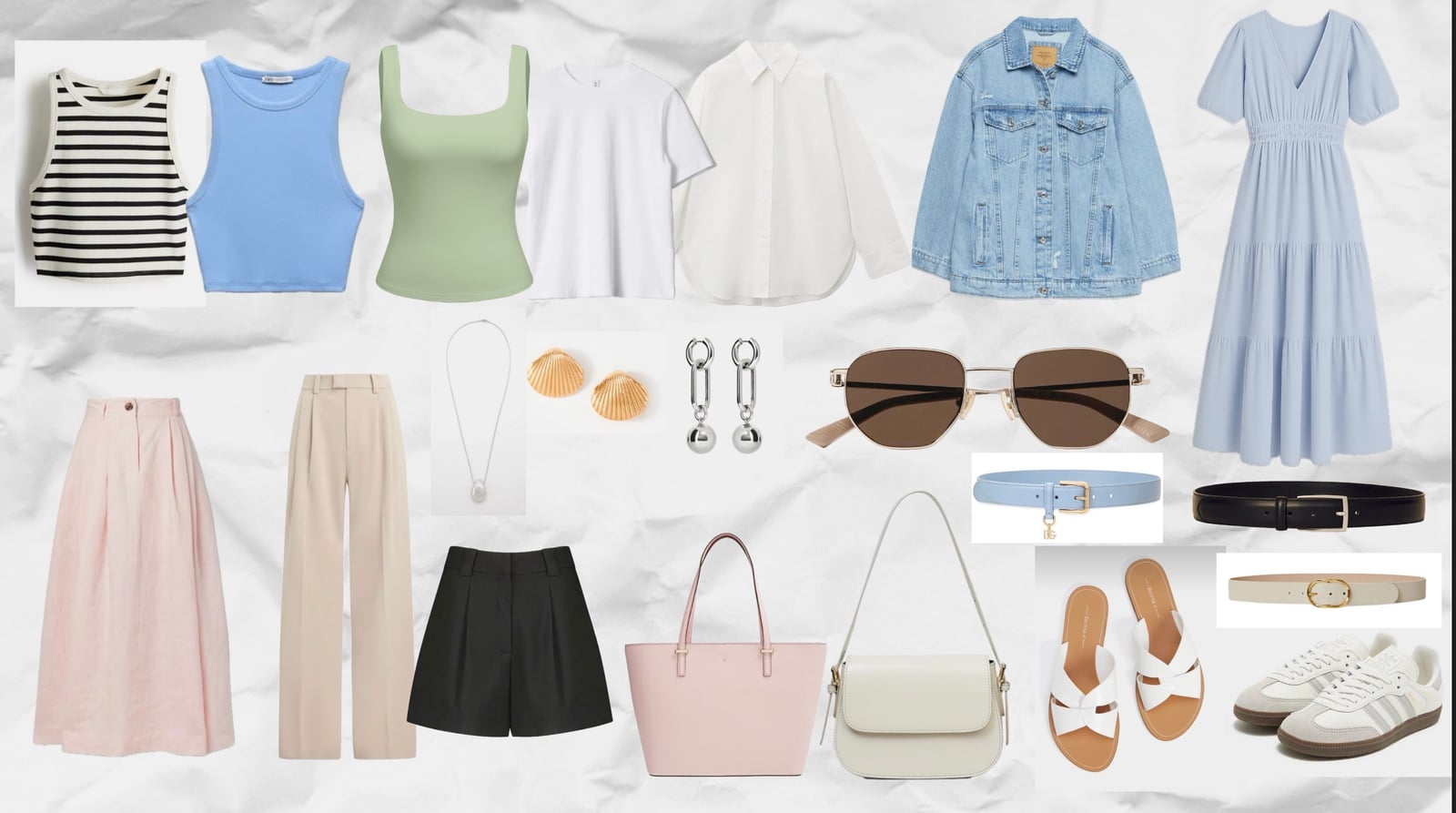
Here's what it looks like in real life. The summer capsule of my client — a mother of several on maternity leave: a few items and accessories, all going together — covering a whole summer. Walks, errands, going out.
How this affects the budget. Every item now passes a check: is it a base or an accent? What in my wardrobe does it go with? If an item doesn't fit into any capsule — it's a red flag: let it stay in the store.
Yes, there's an exception — an outfit for a special event. But when the wardrobe is built well, a separate outfit usually isn't needed: it can be assembled from what you have. Play with imagination and use outfit formulas.
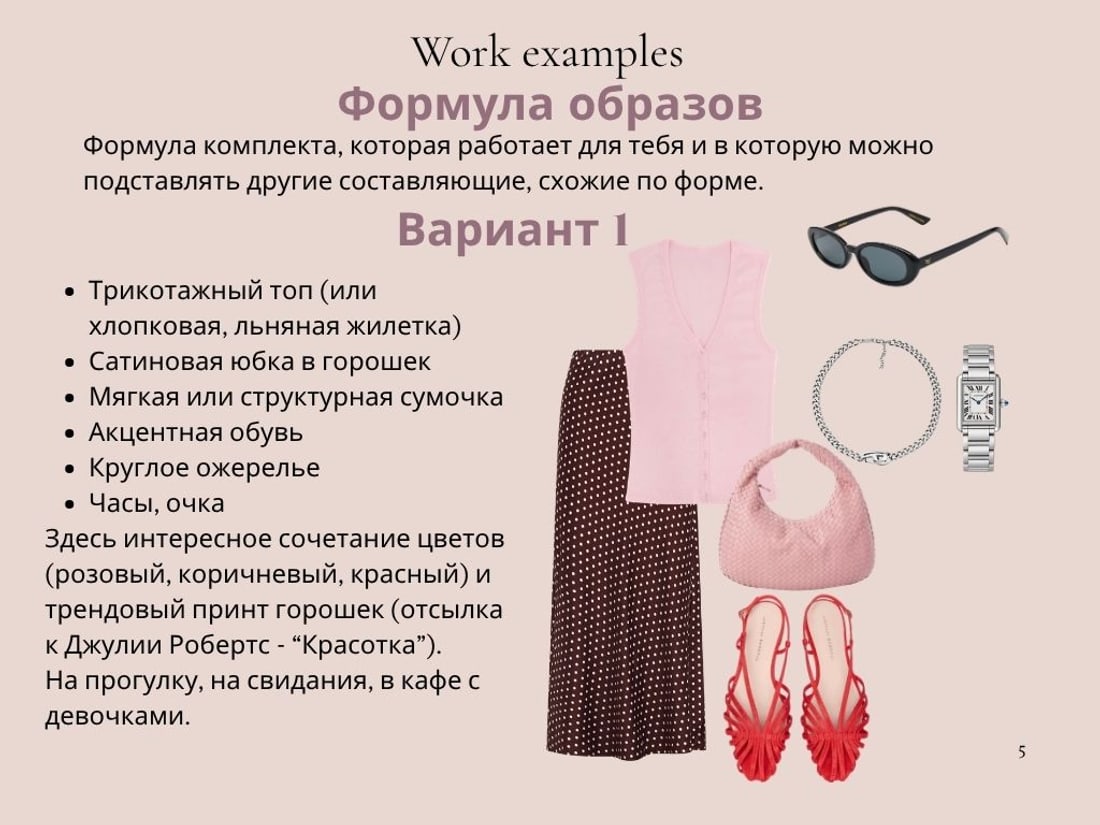
An outfit formula is a framework: a combination of items and accessories that works for you, into which you can swap other components of similar shape. One formula — dozens of ready solutions from your own wardrobe.
And one last thing. Inside a capsule there's a proportion of its own: there are more tops than bottoms — and that's a separate conversation.
This article is a chapter from my book «Стиль и жизнь. Взгляд домохозяйки» (Style and Life: A Homemaker's View). It holds the whole system: why a full closet doesn't work, the base, body type, colors, capsules and accents — with my story and science you can lean on. Read the book at omale.style.