What a Base Really Is
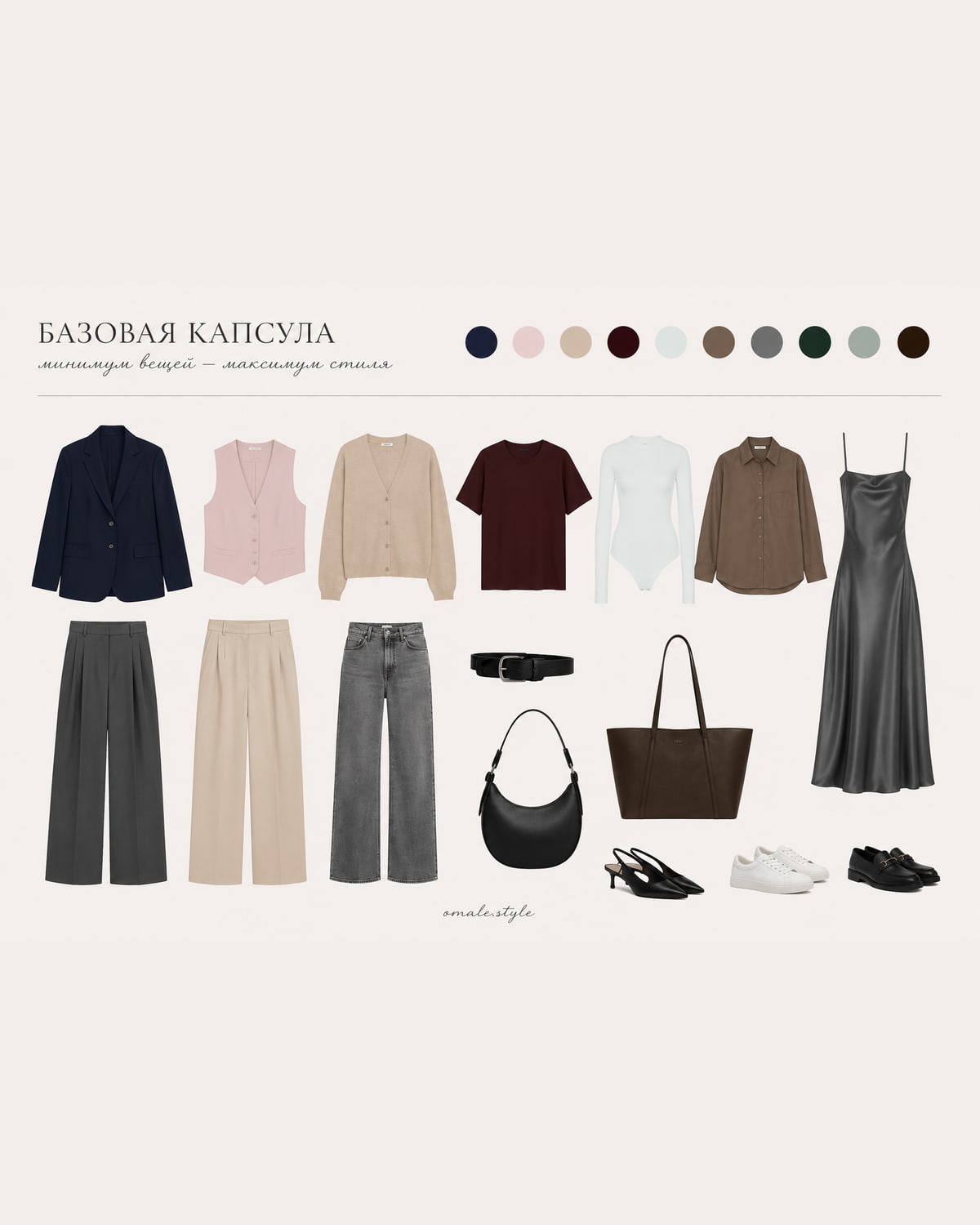
Type "basic wardrobe" into a search engine and you'll get roughly the same list every time. A white T-shirt, a white shirt, jeans, a trench coat. As if every woman had been handed one and the same instruction sheet.
There are no jeans in my wardrobe. None at all. I prefer trousers and skirts — that's my taste. And who said jeans are mandatory? In the hot climate where I live, they're uncomfortable. I think many people here wear them out of habit — even though there are countless comfortable alternatives.
If jeans can be calmly crossed off the "mandatory list," then there is no mandatory list. The base isn't a set of items that are the same for everyone.
And it isn't even about color. Most often a base is built in neutral colors — the ones actually called basic: black, white, grey, beige, chocolate, navy, burgundy, dark green, powder pink. But that's not a law. Any colors that you like and that fit your life can be basic. How to find yours — that will be a separate article.
The main thing that sets the base apart is the cut. A classic, calm cut. Such pieces go with anything and "calm down" bright pieces with an unusual cut.
A base with a classic cut, made from quality fabric, works for years. Put on a beautiful, unusual top with a base midi skirt — one that may already be ten years old — and people will read the whole look as new and elegant.
For contrast, a figure about how we wear clothes today. On average, a garment today is worn only seven to ten times — and then we part with it. Over the past fifteen years we've come to wear our clothes about a third less. They don't wear out — they bore us, because they were bought for a moment, not for a wardrobe.
Now count the cost per wear. A trendy piece worn seven times costs a seventh of its price each time. A base skirt you wear for ten years — pennies per wear. The expensive thing turns out to be not the one with the higher price tag, but the one that goes unworn.
And that's just money. There's also your morning energy. In an interview, Barack Obama explained why he only wears grey and blue suits: he cuts down on small decisions — there are already too many of them, and each one drains energy. Psychologists call this decision fatigue. The base does the same thing for your morning: less rummaging in front of the closet — more energy for the day.
And then there's the arithmetic of outfits. Five base tops and three bottoms that all go together — that's already fifteen different outfits. Add a couple of bright pieces to the base, and the count runs into the dozens. New outfits appear without a single purchase — out of your own wardrobe.
So don't think the base is boring. No one is making you wear outfits built entirely from the base. The base is the foundation of a wardrobe. That very reference point: what to buy a new piece to go with, and what to build new outfits from.
And which base is right for you specifically depends on your figure and your life. Read about that in my next article.